

Texas
Texas
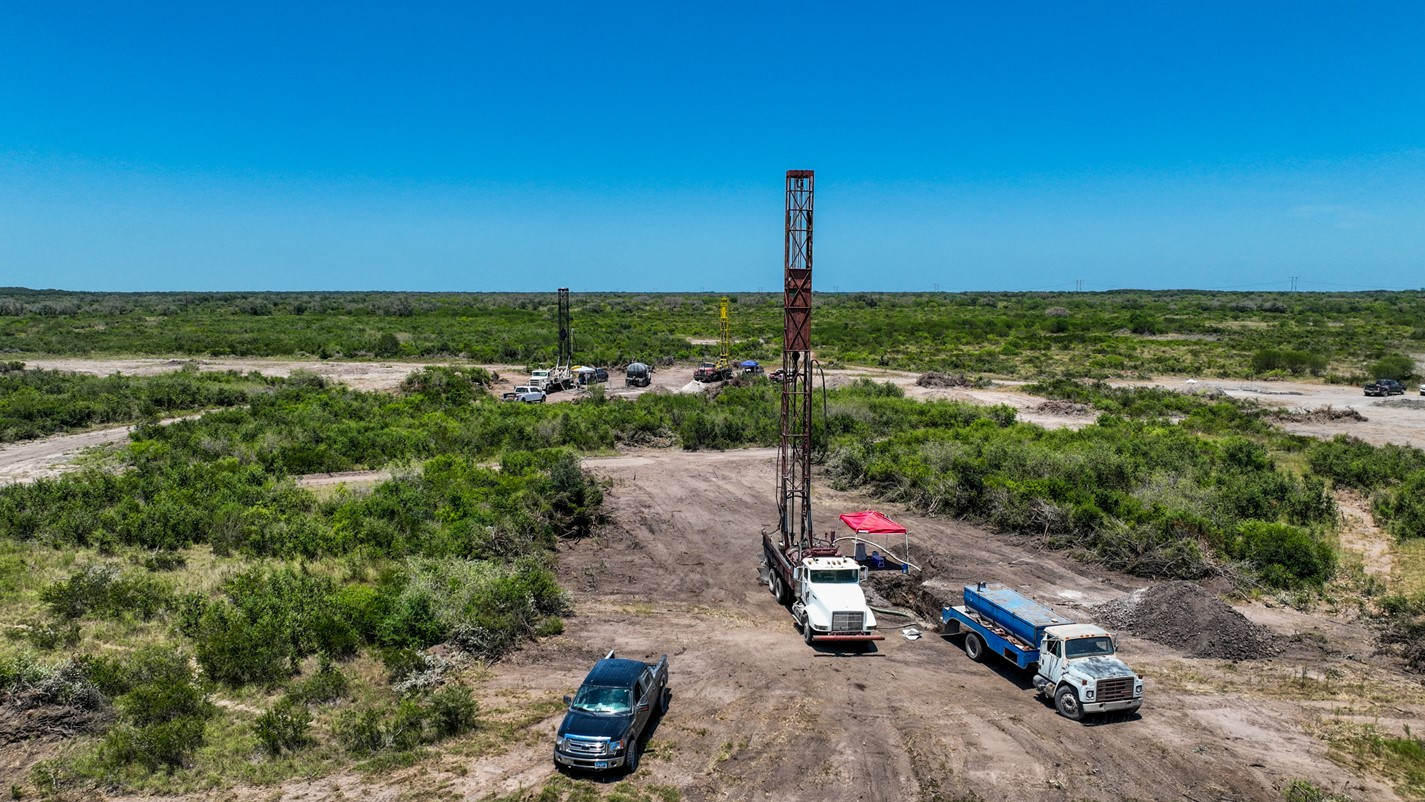
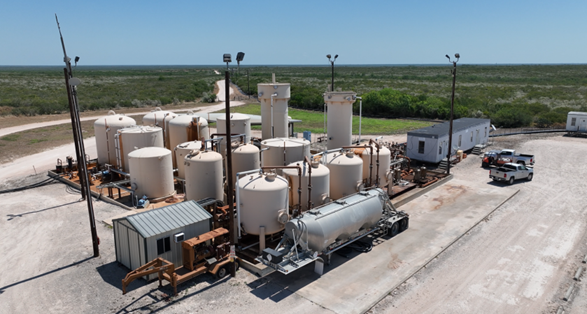
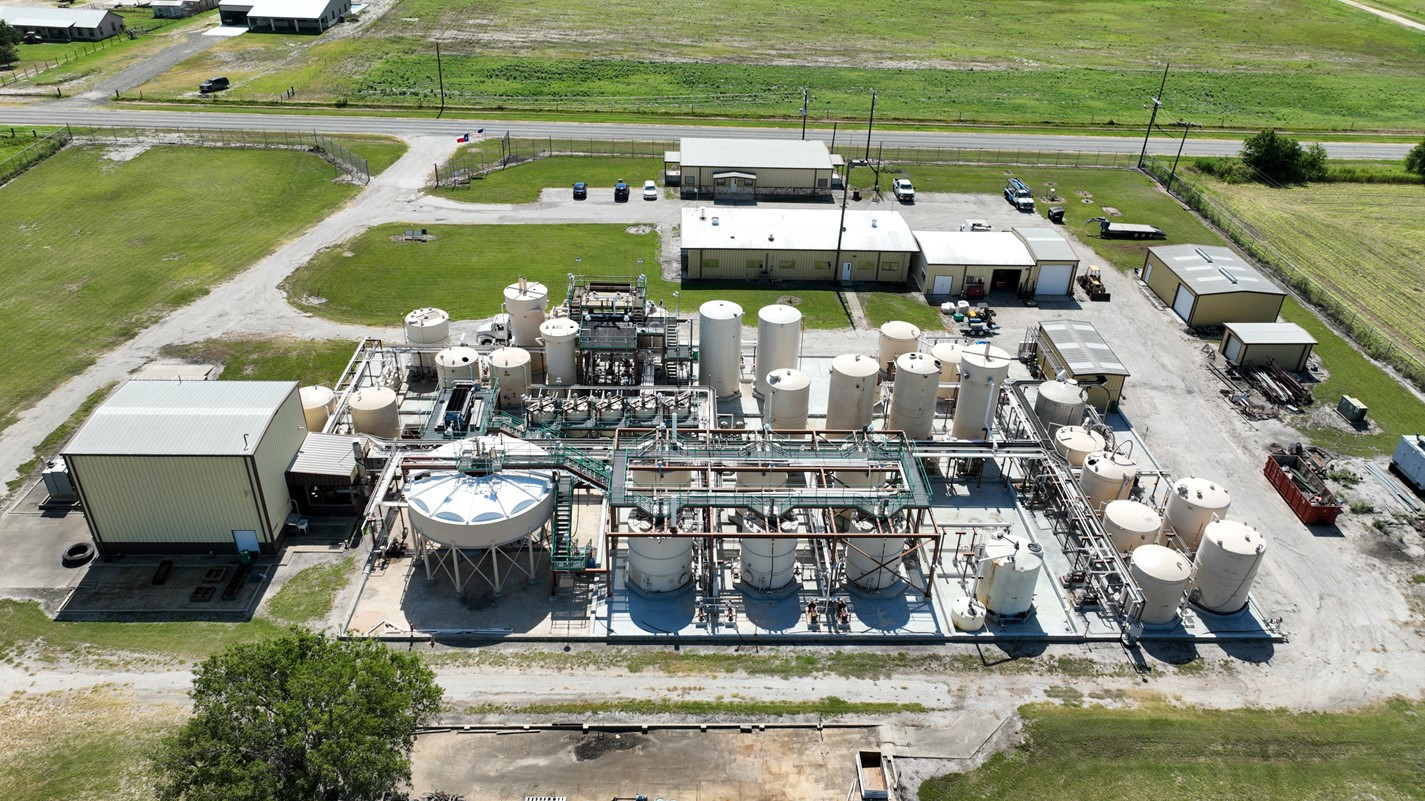
- Hobson Central Processing Plant (CPP) is the Hub to five satellite In-Situ Recovery (ISR) project areas (Spokes) across the Texas Uranium Belt, including three fully permitted projects and the newest and largest ISR wellfield being developed in the U.S. (the Burke Hollow Project).
- Successful delineation drilling program and a new S-K 1300 technical report increased Burke Hollow’s Measured and Indicated Resources from 2,324,000 lbs U3O8 to 6,155,000 lbs
- 4 Million pounds per year of licensed production capacity

This IA TRS has been prepared in accordance with the regulations set forth in S-K 1300 with the objective of disclosing the mineral resources at the Project and Platform.
Based on the density of drilling, continuity of geology and mineralization, testing and data verification, the mineral resource estimates meet the criteria for indicated or inferred mineral resources as summarized herein.
The in-place resources were estimated separately for each project area. The Platform contains a measured resource of 3,631,900 lbs and an indicated resource of 9,326,100 lbs of U3O8 in-place. The Platform contains 9,948,100 lbs of inferred mineral resources in-place. Tables 1 and 2 below list the Platform resources by the project area. Mineral resources are not mineral reserves and do not have demonstrated economic viability. However, considerations of reasonable prospects for eventual economic extraction were applied to the mineral resource calculations herein.
Table 1: Texas Hub and Spoke Project Measured and Indicated Resource Summary
| Mineral Resource | GT Cutoff |
Average Grade (% eU3O8) |
Ore Tons (000s) |
eU3O8 (lbs) |
| Burke Hollow | ||||
| Measured | 0.30 | 0.086 | 581 | 964,000 |
| Indicated | 0.30 | 0.083 | 3,329 | 5,191,000 |
| Total Measured and Indicated | 0.30 | 0.083 | 3,910 | 6,155,000 |
| Goliad | ||||
| Measured | 0.20 | 0.053 | 1,595 | 2,667,900 |
| Indicated | 0.20 | 0.102 | 1,504 | 3,492,000 |
| Total Measured and Indicated | 0.20 | 0.085 | 3,099 | 6,159,900 |
| Palangana | ||||
| Measured | - | - | - | - |
| Indicated | None | 0.134 | 232 | 643,100 |
| Total Measured and Indicated | None | 0.134 | 232 | 643,100 |
| Salvo | ||||
| All mineral resources at Salvo are classified as Inferred. | ||||
| Project Totals | ||||
| Measured | 3,631,900 | |||
| Indicated | 9,326,100 | |||
| Total Measured and Indicated | 12,958,000 | |||
Notes:
- Pounds reported with disequilibrium factor (“DEF”) applied (except at Burke Hollow).
- Measured and indicated mineral resources as defined in 17 CFR § 229.1300.
- All reported resources occur below the static water table.
- The point of reference for mineral resources is in-situ at the Project.
- Mineral resources are not mineral reserves and do not have demonstrated economic viability.
- Delineation drilling conducted at Palangana after 2010 was not incorporated into the resource estimate as in the experience of the QP, this type of drilling does not generally substantially change the resource estimates.
- An 80% metallurgical recovery factor was considered for the purposes of determining the reasonable prospect of economic extraction.
Table 2: Texas Hub and Spoke Project Inferred Resource Summary
| Mineral Resource | GT Cutoff | Average Grade (% eU3O8) | Ore Tons (000s) | eU3O8 (lbs) |
| Burke Hollow | ||||
| Inferred | 0.30 | 0.104 | 2,596 | 4,883,000 |
| Goliad | ||||
| Inferred | 0.20 | 0.195 | 333 | 1,224,800 |
| Palangana | ||||
| PA-1 and PA-2 Inferred | None | 0.100 | 96 | 192,500 |
| Dome, NE Garcia, SW Garcia, CC Brine, Jemison Fence, Jemison East Inferred | 0.10 | 0.110 - 0.300 | 206 | 808,800 |
| Salvo | ||||
| Inferred | 0.30 | 0.091 | 1,125 | 2,839,000 |
| Project Totals | ||||
| Total Inferred | 4,356 | 9,948,100 | ||
Notes:
- Pounds reported with DEF applied.
- A range of grades is presented for the Palangana inferred mineral because the resource estimation methods differed between PA-1/PA-2 and the rest of the trends. There was no cutoff for PA-1 and PA-2 block models. See Section 11.1 of the TRS for a more detailed explanation.
- Inferred mineral resources as defined in 17 CFR § 229.1300.
- All reported resources occur below the static water table.
- The point of reference for mineral resources is in-situ at the Project.
- Mineral resources are not mineral reserves and do not have demonstrated economic viability.
- Delineation drilling conducted at Palangana after 2010 was not incorporated into this resource estimate, as in the experience of the QP this type of drilling does not generally substantially change the resource estimates.
The technical information in this news release has been reviewed and approved by Western Water Consultants, Inc., d/b/a/ WWC Engineering, an independent, third party consulting firm to the Company, and by Andrew W. Kurrus III, P.G., V.P. of Resource Development, Texas, for the Company, who fulfill the requirements as a “qualified person” for the purposes of S-K 1300.
Texas Project Gallery
Texas Careers
UEC is an active energy resource company seeking to fill multiple full-time positions for our uranium project in Beeville, Texas. UEC is an equal opportunity employer, offering competitive salaries and a robust benefit package; including paid medical insurance, paid dental insurance, vision, generous PTO, various paid holidays, and 401(k) Plan with Company match.